
The Seller's Guide to a Short Sale
Everything you need to know about qualifying for, starting, and completing a short sale — explained clearly, from start to finish.
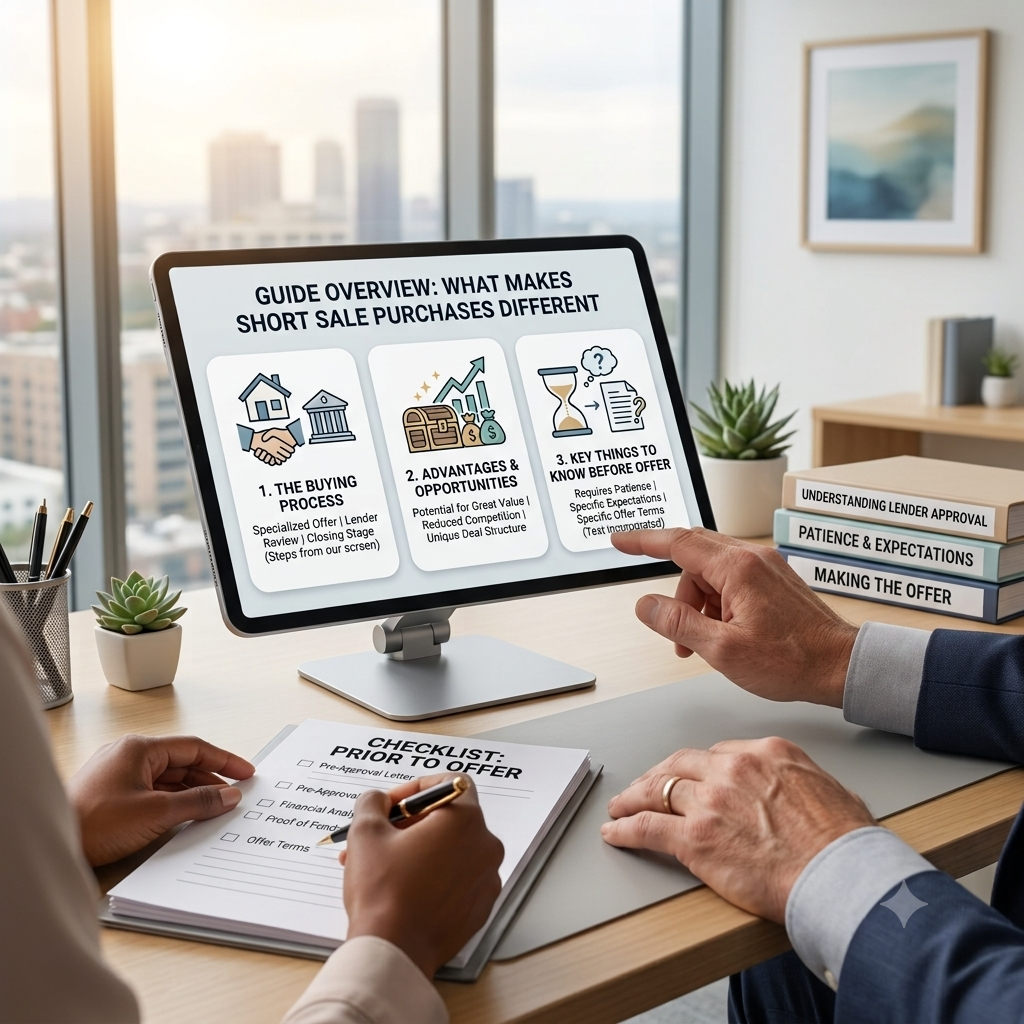
Understanding the Short Sale Process
If you're behind on your mortgage or know you won't be able to keep up with payments, a short sale may allow you to sell your home and resolve your mortgage debt — without the long-term consequences of foreclosure.
This guide walks through what qualifies a homeowner for a short sale, what documentation is typically required, and what to expect at every stage of the process.
Do You Qualify for a Short Sale?
Every situation is different, but most qualifying homeowners share a few common circumstances.
Financial Hardship
You're experiencing a qualifying hardship, such as job loss, medical expenses, divorce, or a significant income reduction.
Owe More Than It's Worth
Your outstanding mortgage balance is close to or exceeds your home's current market value.
Missed or At-Risk Payments
You've missed payments, or you can demonstrate that missing payments is imminent without a change in circumstances.
Willingness to Sell
You're prepared to sell your home as part of resolving your mortgage debt.
What You'll Need to Provide
We help you gather and organize everything your lender requires to review your case.
Hardship Letter
A written explanation of the financial hardship that's affecting your ability to make payments.
Financial Statements
Recent pay stubs, tax returns, and bank statements documenting your current financial situation.
Mortgage Statement
Your most recent mortgage statement showing your loan balance and payment history.
Comparative Market Analysis
Documentation supporting your home's current market value relative to your loan balance.
What to Expect, Step by Step
We manage the moving parts so you always know where things stand.
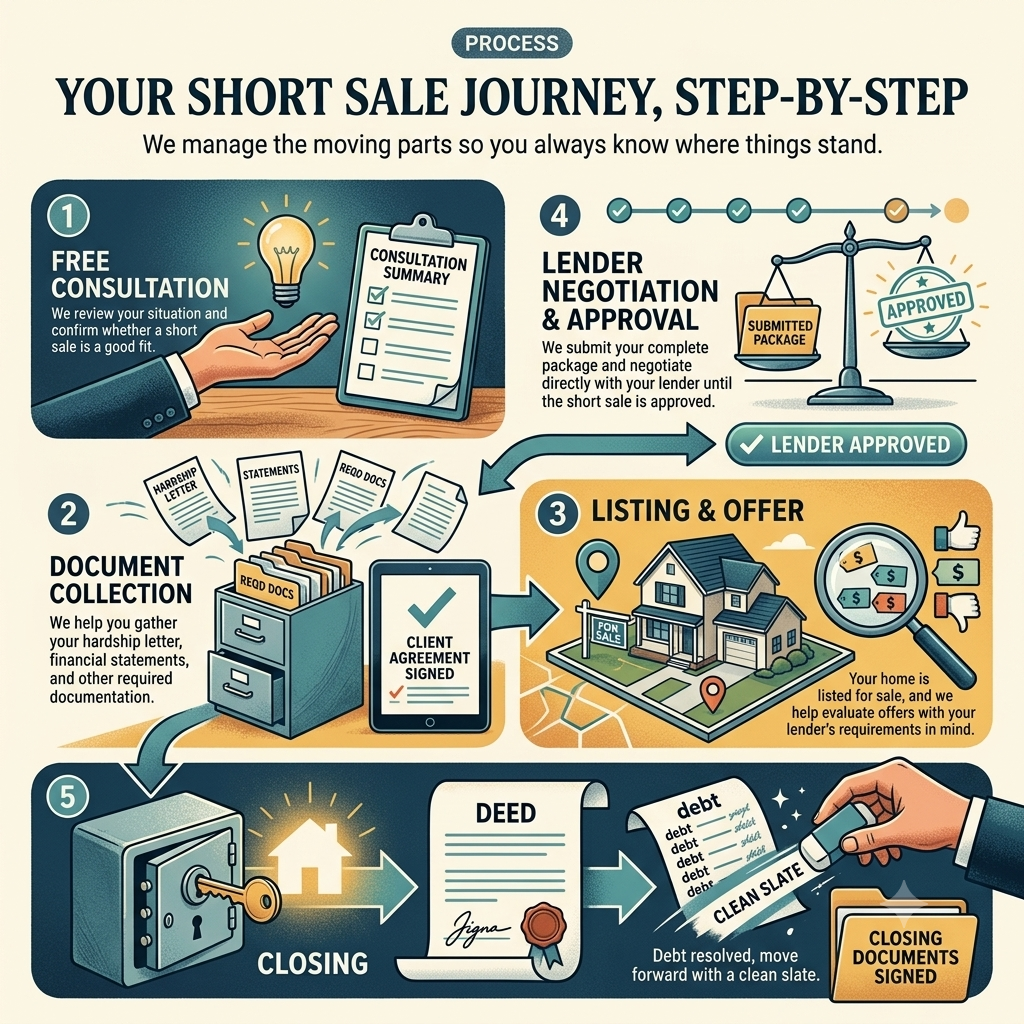
Free Consultation
We review your situation and confirm whether a short sale is a good fit for your circumstances.
Document Collection
We help you gather your hardship letter, financial statements, and other required documentation.
Listing & Offer
Your home is listed for sale, and we help evaluate offers with your lender's requirements in mind.
Lender Negotiation & Approval
We submit your complete package and negotiate directly with your lender until the short sale is approved.
Closing
Your short sale closes, your mortgage debt is resolved, and you move forward with a clean slate.
What a Short Sale Can Do For You
A short sale isn't just an alternative to foreclosure — it's a chance to resolve your debt and move forward on your own terms.
Avoid Foreclosure
A completed short sale allows you to satisfy your mortgage debt without the long-term consequences of foreclosure.
Protect Your Credit
Short sales typically have a less severe impact on your credit score and history than a foreclosure.
Reduce Financial Stress
Our team manages lender communication and negotiation, easing the burden during a difficult time.
Move Forward With a Fresh Start
Resolve your mortgage debt and put yourself in a stronger position to rebuild financially.
Seller FAQs
Qualification generally depends on demonstrating financial hardship and that your mortgage balance is close to or above your home's market value. We can review your specific situation in a free consultation.
Ready to Explore Your Options?
Schedule a free, confidential consultation and let's determine whether a short sale is the right path for you.